The majority of the items on the two lists are covered in the timetable. Copy this to your blog and cross them off as you complete them.
Video
1. Juno opening titles swede
2. Analysis of film opening from Youtube
3. Analysis of student opening
4. Prelim task and evaluation
5. 25 word pitch
6. Make a company logo and Ident
7. Nine frames moodboard sheet
8. Titles timeline from art of the Title
9. Storyboard and animatic
10. Recce shots and photos on the shoot
11. Screengrabs throughout editing
12. Rough cut for feedback
Print
1. re-make a cover with your own pictures
2. analyse the relevant four pages from different magazines
3. analyse some student magazines
4. prelim task and evaluation
5. pitch your new magazine within the market
6. make your banner
7. magazine moodboard
8. breakdown of institutional features
9. flatplan and photo-flatplan
10. recce shots and rehearsal shots; photos of group in action
11. Screengrabs throughout of photoshop and DTP
12. Draft version for feedback
Wednesday, 16 December 2009

Tuesday, 15 December 2009
Film title sequences

A selection of film title sequences that i've compiled on YouTube to help with inspiration. They are not choices you would necessarily gravitate towards, however they should provide an enlightening alternative to the many sequences you may have already viewed. Click on image above to access the playlist(you will need to sign in to youtube - you can use your google account login details - then click on playlists and the icon on the top right)
Magazine covers-flatplans


Examples of a flatplan and other very interesting ideas to help you with the creation of a magazine cover, contents page and indeed, a double page spread. It is worth attempting to find similar sites yourselves to gain insight from the pov of other media creative types.
Brainstorming app.

Courtesy of Hannah Skidmore. A pretty decent looking app. to add some interest to those brainstorming sessions you are no doubt contemplating. Click on image above.
Magazine terms glossary

Click on the picture of Zac Efron to find a rather useful magazine terms glossary. For those of you attempting to create your own magazine covers this is essential reading.
Monday, 14 December 2009
Thursday, 10 December 2009
Year 12 coursework
Unit 1 G321: Foundation Portfolio in Media (worth 50% of the marks available at AS)
The Foundation Portfolio is a Coursework Unit, consisting of either 2 video productions or 2 Photoshop constructions and an online blog. The first video piece will be a short sequence produced to demonstrate basic technical ability and understanding of continuity technique. The second is a fully developed production produced to demonstrate skill development, consisting of the first 2 minutes of a fiction film, based on an original idea developed by the students. The first Photoshop element will be a cover and contents page for a school magazine. The second is a front cover, contents page and double page spread for a music magazine. All images and text must be original. The students will work in groups but will be assessed individually on their work in the following stages:
*Pre-production: research, planning, development of ideas, scripting, storyboarding, magazine mock-ups, layouts,colour schemes
*Production: shooting, lighting, working with sets, actors and scripts,photography,working with models
*Post-production: editing, special and sound effects, music,photoshop effects,applying text
Evidence for the different stages will be presented via an online blog. Students will be expected to evaluate the finished film production according to specific theoretical criteria and this will also be presented through the blog.
Assessment: Marking is out of 100 (20 marks for research + planning, 60 marks for practical work, 20 marks for the evaluation).
The Foundation Portfolio is a Coursework Unit, consisting of either 2 video productions or 2 Photoshop constructions and an online blog. The first video piece will be a short sequence produced to demonstrate basic technical ability and understanding of continuity technique. The second is a fully developed production produced to demonstrate skill development, consisting of the first 2 minutes of a fiction film, based on an original idea developed by the students. The first Photoshop element will be a cover and contents page for a school magazine. The second is a front cover, contents page and double page spread for a music magazine. All images and text must be original. The students will work in groups but will be assessed individually on their work in the following stages:
*Pre-production: research, planning, development of ideas, scripting, storyboarding, magazine mock-ups, layouts,colour schemes
*Production: shooting, lighting, working with sets, actors and scripts,photography,working with models
*Post-production: editing, special and sound effects, music,photoshop effects,applying text
Evidence for the different stages will be presented via an online blog. Students will be expected to evaluate the finished film production according to specific theoretical criteria and this will also be presented through the blog.
Assessment: Marking is out of 100 (20 marks for research + planning, 60 marks for practical work, 20 marks for the evaluation).
Wednesday, 9 December 2009
Wednesday, 2 December 2009
Example AS Blog
THIS is an example of an excellent AS blog. If you look at the range of technology employed you'll notice that we are encouraging you to do more than these students have. What technology can't do however is hide any lack of effort or knowledge. Planning (aka preproduction) is essential, you cannot take short cuts or assume it will all turn out fine in the end. Nothing has been left to chance, they check weather forecasts, create animatics, analyse other film openings, recreate other film openings, describe their target audience by creating profiles, produce rough cuts of their film and get feedback from their peers which informs future decisions, spend 12 HOURS filming in one day, work in their spare time over half term. I could go on.
There is no excuse for not having an exemplary blog, this is one area where all students can achieve top grades and where time is not an issue. EVERY member of TEAM FORD is expected to have a C grade blog at worst.
Finally this blog also demonstrates how all areas of the course are intertwined, their practical is clearly based on representation issues (specifically youth) as well as some of the theory you have covered (narrative).
This post originally appeared in Mr Smith's blog.
There is no excuse for not having an exemplary blog, this is one area where all students can achieve top grades and where time is not an issue. EVERY member of TEAM FORD is expected to have a C grade blog at worst.
Finally this blog also demonstrates how all areas of the course are intertwined, their practical is clearly based on representation issues (specifically youth) as well as some of the theory you have covered (narrative).
This post originally appeared in Mr Smith's blog.
Inspiration-Colour and Visuals

Colour Lovers is a very interesting site that will help you with colour ideas. Have a look at the palettes on display and post some in your blog as inspiration for your own colour choices. It is really important that you make informed decisions about colour, don't just leave it to chance.


Creative Review is a brilliant website that will help you with your visual ideas. It is worth taking the time to explore it fully. As i showed you with the Guinness Surfer presentation, inspiration can come from unlikely sources.
Click on logos to go to websites (also see link list).

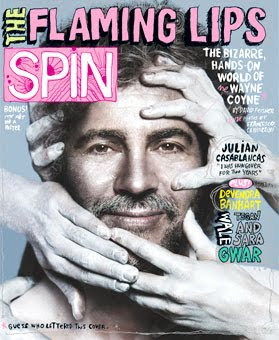
The Flaming Lips-Do You Realize??
This song stands as one of my favourites because of the contrast between the upbeat, optimistic nature of the music and the startling lyrics that highlight how insignificant we are. To be reminded that everyone we know will one day die (which is obvious, but not something we would like to spend too much time contemplating) in such a way makes me realize how short and precious life is and reminds me to focus on the good things.
Do You Realize - that you have the most beautiful face
Do You Realize - we're floating in space -
Do You Realize - that happiness makes you cry
Do You Realize - that everyone you know someday will die
And instead of saying all of your goodbyes - let them know
You realize that life goes fast
It's hard to make the good things last
You realize the sun doesn't go down
It's just an illusion caused by the world spinning round
Do You Realize - Oh - Oh - Oh
Do You Realize - that everyone you know
Someday will die -
And instead of saying all of your goodbyes - let them know
You realize that life goes fast
It's hard to make the good things last
You realize the sun doesn't go down
It's just an illusion caused by the world spinning round
Do You Realize - that you have the most beautiful face
Do You Realize
Do You Realize - that you have the most beautiful face
Do You Realize - we're floating in space -
Do You Realize - that happiness makes you cry
Do You Realize - that everyone you know someday will die
And instead of saying all of your goodbyes - let them know
You realize that life goes fast
It's hard to make the good things last
You realize the sun doesn't go down
It's just an illusion caused by the world spinning round
Do You Realize - Oh - Oh - Oh
Do You Realize - that everyone you know
Someday will die -
And instead of saying all of your goodbyes - let them know
You realize that life goes fast
It's hard to make the good things last
You realize the sun doesn't go down
It's just an illusion caused by the world spinning round
Do You Realize - that you have the most beautiful face
Do You Realize
Tuesday, 1 December 2009
The End of Music
By GLENN BRANCA
We seem to be on the edge of a paradigm shift. Orchestras are struggling to stay alive, rock has been relegated to the underground, jazz has stopped evolving and become a dead art, the music industry itself has been subsumed by corporate culture and composers are at their wit’s end trying to find something that’s hip but still appeals to an audience mired in a 19th-century sensibility.
For more than half a century we’ve seen incredible advances in sound technology but very little if any advance in the quality of music. In this case the paradigm shift may not be a shift but a dead stop. Is it that people just don’t want to hear anything new? Or is it that composers and musicians have simply swallowed the pomo line that nothing else new can be done, which ironically is really just the “old, old story.”
Certainly music itself is not dead. We’ll continue to hear something approximating it blaring in shopping malls, fast food stops, clothing stores and wherever else it will mesmerize the consumer into excitedly pulling out their credit card or debit card or whatever might be coming.
There’s no question that in music, like politics, the bigger the audience gets the more the “message” has to be watered down. Muzak’s been around for a long time now but maybe people just can’t tell the difference anymore. Maybe even the composers and songwriters can’t tell the difference either. Especially when it’s paying for a beach house in Malibu and a condo in New York.
Of course, we could all just listen to all of our old albums, CD’s and mp3’s. In fact, nowadays that’s where the industry makes most of its money. We could also just watch old movies and old TV shows. There are a lot of them now. Why bother making any new ones? Why bother doing anything new at all? Why bother having any change or progress at all as long as we’ve got “growth”? I’m just wondering if this is in fact the new paradigm. I’m just wondering if in fact the new music is just the old music again. And, if that in fact it would actually just be the end of music.
New York Times
We seem to be on the edge of a paradigm shift. Orchestras are struggling to stay alive, rock has been relegated to the underground, jazz has stopped evolving and become a dead art, the music industry itself has been subsumed by corporate culture and composers are at their wit’s end trying to find something that’s hip but still appeals to an audience mired in a 19th-century sensibility.
For more than half a century we’ve seen incredible advances in sound technology but very little if any advance in the quality of music. In this case the paradigm shift may not be a shift but a dead stop. Is it that people just don’t want to hear anything new? Or is it that composers and musicians have simply swallowed the pomo line that nothing else new can be done, which ironically is really just the “old, old story.”
Certainly music itself is not dead. We’ll continue to hear something approximating it blaring in shopping malls, fast food stops, clothing stores and wherever else it will mesmerize the consumer into excitedly pulling out their credit card or debit card or whatever might be coming.
There’s no question that in music, like politics, the bigger the audience gets the more the “message” has to be watered down. Muzak’s been around for a long time now but maybe people just can’t tell the difference anymore. Maybe even the composers and songwriters can’t tell the difference either. Especially when it’s paying for a beach house in Malibu and a condo in New York.
Of course, we could all just listen to all of our old albums, CD’s and mp3’s. In fact, nowadays that’s where the industry makes most of its money. We could also just watch old movies and old TV shows. There are a lot of them now. Why bother making any new ones? Why bother doing anything new at all? Why bother having any change or progress at all as long as we’ve got “growth”? I’m just wondering if this is in fact the new paradigm. I’m just wondering if in fact the new music is just the old music again. And, if that in fact it would actually just be the end of music.
New York Times
The death of uncool
Brian Eno — 25th November 2009
It’s odd to think back on the time—not so long ago—when there were distinct stylistic trends, such as “this season’s colour” or “abstract expressionism” or “psychedelic music.” It seems we don’t think like that any more. There are just too many styles around, and they keep mutating too fast to assume that kind of dominance.
As an example, go into a record shop and look at the dividers used to separate music into different categories. There used to be about a dozen: rock, jazz, ethnic, and so on. Now there are almost as many dividers as there are records, and they keep proliferating. The category I had a hand in starting—ambient music—has split into a host of subcategories called things like “black ambient,” “ambient dub,” “ambient industrial,” “organic ambient” and 20 others last time I looked. A similar bifurcation has been happening in every other living musical genre (except for “classical” which remains, so far, simply “classical”), and it’s going on in painting, sculpture, cinema and dance.
We’re living in a stylistic tropics. There’s a whole generation of people able to access almost anything from almost anywhere, and they don’t have the same localised stylistic sense that my generation grew up with. It’s all alive, all “now,” in an ever-expanding present, be it Hildegard of Bingen or a Bollywood soundtrack. The idea that something is uncool because it’s old or foreign has left the collective consciousness.
I think this is good news. As people become increasingly comfortable with drawing their culture from a rich range of sources—cherry-picking whatever makes sense to them—it becomes more natural to do the same thing with their social, political and other cultural ideas. The sharing of art is a precursor to the sharing of other human experiences, for what is pleasurable in art becomes thinkable in life.
This article first appeared in the December edition of Prospect magazine
It’s odd to think back on the time—not so long ago—when there were distinct stylistic trends, such as “this season’s colour” or “abstract expressionism” or “psychedelic music.” It seems we don’t think like that any more. There are just too many styles around, and they keep mutating too fast to assume that kind of dominance.
As an example, go into a record shop and look at the dividers used to separate music into different categories. There used to be about a dozen: rock, jazz, ethnic, and so on. Now there are almost as many dividers as there are records, and they keep proliferating. The category I had a hand in starting—ambient music—has split into a host of subcategories called things like “black ambient,” “ambient dub,” “ambient industrial,” “organic ambient” and 20 others last time I looked. A similar bifurcation has been happening in every other living musical genre (except for “classical” which remains, so far, simply “classical”), and it’s going on in painting, sculpture, cinema and dance.
We’re living in a stylistic tropics. There’s a whole generation of people able to access almost anything from almost anywhere, and they don’t have the same localised stylistic sense that my generation grew up with. It’s all alive, all “now,” in an ever-expanding present, be it Hildegard of Bingen or a Bollywood soundtrack. The idea that something is uncool because it’s old or foreign has left the collective consciousness.
I think this is good news. As people become increasingly comfortable with drawing their culture from a rich range of sources—cherry-picking whatever makes sense to them—it becomes more natural to do the same thing with their social, political and other cultural ideas. The sharing of art is a precursor to the sharing of other human experiences, for what is pleasurable in art becomes thinkable in life.
This article first appeared in the December edition of Prospect magazine
Dangermouse-Encore
The Black Album and The White Album mixed equals The Grey Album (mixed by Dangermouse of Gnarls Barkley fame). The video is an unofficial mash up of The Beatles and Jay-Z.
Monday, 30 November 2009
Bunny and the Bull-Trailer

Bunny & the Bull, the feature film debut from writer/director Paul King (The Mighty Boosh) released in UK cinemas on the 27th November.
Bunny & the Bull is a road movie set entirely in a flat. Stephen Turnbull hasn’t been outside in months. Living with a painfully restrictive routine, he refuses to interact with the world or think about the past. When a sudden infestation of mice forces him to change his ways, he finds his mind hurtling back to the disastrous trek around Europe he undertook with his friend Bunny, a womanising, gambling-addicted booze-hound. Unable to stem the flood of memories, Stephen’s flat becomes the springboard for an extraordinary odyssey through landscapes made up of snapshots and souvenirs, from the industrial wastelands of Silesia to the bull fields of Andalusia. A story of love, disillusionment, stuffed bears and globalised seafood,Bunny & the Bull is an offbeat and heartfelt journey to the end of the room. The fifth film on the Warp X slate, Bunny & the Bull stars Edward Hogg (White Lightnin', Brothers of the Head), Simon Farnaby (The Mighty Boosh, Jam and Jerusalem) and Veronica Echegui (El Patio de mi Carcel, Yo soy la Juani). Julian Barratt, Noel Fielding and Richard Ayoade also appear in supporting roles.
Institution and audience introductory activity
Before we start to look at Warp (our institution) i want you to start to think about how you engage with music. Structure your ideas using the following bullet points:
- what type/ genre
- artists
- where
- how
Compose a powerpoint if you wish to show your findings. Make a wordle as well to illustrate this work.
I then want each of you to pick one music track (your favourite) and explain why you like the song. Make a short powerpoint for this activity.
Friday, 27 November 2009
Vampire Weekend-Cousins
Vampire Weekend have just released a video for their previously announced single "Cousins," following last month's release of "Horchata." The track is available from XL digitally now, and will be available on 7" December 15th. It will also appear on their highly anticipated new record Contra, available January 12th. The Garth Jennings-directed video is a low budget but creative piece filmed in what appears to be a New York City alleyway. There's a brief moment about halfway in that references Bob Dylan's classic "Subterranean Homesick Blues" cue card video clip, and the track ends on a defiant note: regular bell is the new cowbell.
Wednesday, 25 November 2009
Grizzly Bear-Ready,Able
As a taster to the work we will do on Warp as an institution this is the lastest video for the American indie band Grizzly Bear (who are by no means representative of Warp as a label). Stop motion is used to great effect in this video.
Camera angles and editing task
Find a definition of each of the following shots and post in your blog:
- long shot
- medium shot
- close up
- shot reverse shot
- high angle shots
- low angle shots
- tracking shot
- pan
- tilt
Then do the same for the following styles of editing:
- continuity
- montage
- montage Hollywood
- transitions
- cross cutting/paralell editing
- dissolve
- wipes
Decide on a film clip and analyse with reference to types of shot and editing used. Make sure you include the clip in your post. You may if you wish use tubechop to highlight the use of particular shots or editing techniques that you think are noteworthy.
Deadline for this is next Wednesday (on completion I will post comments on your blog).
Tuesday, 24 November 2009
Risk Assessment
Your risk assessment needs to cover any hazards you may encounter:
- falls (of crew and equipment)?
- temporary structures?
- tripping hazards?
- vehicles?
- special effects?
- weapons?
- burns from lighting?
For example:
Hazard: falls of men and equipment?
Answer: Yes
Severity: Medium
Likelihood: Medium
Persons at risk: all actors and crew (3+). All equipment.
Precautions: minimise all risks that would cause people to fall and ensure all equipment is stable and secure whilst in use.
Some hazards will simply require a 'No' response.
Section A:Question 1-Skills Development
You need to begin to gather evidence of your skills development. Post evidence on your individual blogs (link this blog to your group blog and vice versa).
Key Areas:
- digital technology
- creativity
- research and planning
- post production
- using conventions from real media texts
Question will refer to 1 or 2 of these areas
You can refer to productions worked on outside the media course
Thursday, 19 November 2009


Wednesday, 18 November 2009


BBC Blast

BBC Blast is a creative learning space where you can develop your skills and confidence by:
- Sharing and discussing your work with others
- getting inspiration and ideas from peers and professionals
- getting involved in workshops across the UK, as well as big-prize competitions
- applying for creative opportunities at the BBC.
Details of the latest competition below:
Watch The Titles

Another great website for film title ideas and inspiration. Click on the title above for access.
Institution and Audience-assessment criteria

Explanation/analysis/argument:
1.understanding of the task
2.knowledge and understanding of institutional/audience practices
3.clear and developed argument with refernce to case study
4.relavant to set question
Use of examples
1.frequent evidence and relevance from case study
2.examples which are relevant and accurate
Use of terminology
1.use of terminology is relevant and accurate
1.understanding of the task
2.knowledge and understanding of institutional/audience practices
3.clear and developed argument with refernce to case study
4.relavant to set question
Use of examples
1.frequent evidence and relevance from case study
2.examples which are relevant and accurate
Use of terminology
1.use of terminology is relevant and accurate
TV drama-assessment criteria

Explanation/analysis/argument:
1.understanding of the task
2.knowledge and understanding of institutional/audience practices
3.clear and developed argument with refernce to case study
4.relavant to set question
Use of examples:
1.frequent evidence and relevance from case study
2.examples which are relevant and accurate
Use of terminology:
1.use of terminology is relevant and accurate
Monday, 16 November 2009
Where The Wild Things Are

A screenprint based on the cover for the latest editions of Little White Lies magazine and Huck magazine.
Film Distribution

Click on the image for an excellent guide to film distribution. The BFI screenonline page includes articles on: licensing, marketing, advertising, the logistics of distribution and digital distribution.
2012 and how good viral marketing can go bad
Disaster movie 2012 inspired panic in the States with Nasa having to reassure Americans that the world wasn't about to end. Is movie viral marketing getting too clever for its own good?

2012, and the Earth finally crumbles. Relax, it's just a movie. Photograph: Columbia Pictures
When Columbia Pictures launched a marketing campaign for 2012 – the latest disaster movie from serial Earth molester Roland Emmerich, where the planet, played by America, is set for impending doom – they didn't do it by halves.
First, there was a teaser trailer showing a tsunami crashing over the Himalayas. The Earth was going to end in 2012, it said, and the world's governments aren't doing enough to prepare us. Search "2012", it said, for "the truth" (the "truth" turned out to be over 1,000 real websites and 175 real books obsessed with 2012 as the end of time).
Then, there was a fake website – the "Institute for Human Continuity" – which consisted of a screen stating that for 25 years they'd been assessing threats to the continuation of mankind, and the results were in.
The "odds of global destruction" in 2012 had been confirmed at 94% (goodbye mortgage) and "to ensure your chance of survival, register for the lottery". In other words, it was a web campaign that seemed to say: "Look, the end of time might actually be coming, so enjoy a film about it why you still can, yeah?"
Many didn't get the joke. Tens of thousands from all over the world panicked, called Nasa, wrote letters – couldn't they do some saving of people too?
'People are really, really worried about the world coming to an end. Kids are contemplating suicide. Adults tell me they can't sleep'
 Photograph: Columbia Pictures
 "I think people are really, really worried about the world coming to an end," said David Morrison of Nasa. "Kids are contemplating suicide. Adults tell me they can't sleep and can't stop crying."
Indeed, Nasa got so many queries, they set up a specific site to deal with them. Yet perhaps even more worryingly, 2012 is not alone. Following the success of Blair Witch, nearly every film worth its celluloid now has its own teaser campaign, web mystery, and viral marketing push, and even the simplest promotional campaign can have unexpected consequences.
For the independently made 2008 animated fantasy Delgo – featuring the voices of Freddie Prinze Jr and Jennifer Love Hewitt – they hit upon the idea of launching "Digital Dailies", where a crack team of animators would whet the public appetite by posting their handiwork as they went. It seemed to work: the videos were getting up to half a million hits a month. Yet, sadly, it seemed most of those were in the industry; they liked what they saw, and began poaching the film's best talent. The director, Marc F Adler, was forced to resort to hiding their identities with aliases.
"It was brilliant as viral marketing," says Adler, "but terrible for making a film."
The "brilliance" of the viral marketing also proved questionable. On a reported budget of $40m, the film's box-office taking was one the worst ever for widely released film (it opened on 2,160 screens), taking just $694,782. According to Yahoo Movies, that works out as roughly two viewers for every screening.
To be fair, their teaser trailer – "From a Studio Nowhere Near Hollywood … From People You've Never Heard of … Comes a Myth for the New Millennium … Delgo" – probably didn't help either.
Yet if that was unexpected, some campaigns just cry out for trouble. Take the case of 2008 indie horror film A Beautiful Day. Set for its debut at an independent film festival in Muskogee, Oklahoma, the makers posted a teaser on YouTube, which featured a sinister synthesized voice saying: "People of Muskogee. Open your eyes. April 25th is a day you'll come to remember", including the message "the end is coming". But 25 April was also the prom night for the local high school. The scared students called the Muskogee police, who assumed it was a terrorist threat, and called in the FBI. Outcome: their film was swiftly booted out of the festival.
And in the world of suspect virals and dodgy publicity stunts, it seems terror threats can come from anywhere. The Cartoon Network's guerilla marketing for cartoon Aqua Teen Hunger Force saw them install LED displays depicting the show's "Moonieites" – 2D aliens from the moon – in 10 major cities across America. In Boston, however, they didn't get the gimmick. Authorities considered the Moonieites suspect devices, which sparked a major bomb scare, caused the closure of roads and posed the question: would al-Qaida really plant bombs that glowed in the dark?
"It had a very sinister appearance," said Attorney General Martha Coakley, adding "It had a battery behind it and wires."
'There are always going to be problems with unbranded campaigns; people may not get the connection to the film, and people fear the unknown'
 Photograph: Joe Lederer
 Of course, ill-judged glowing figurines are one thing.
But even ill-thought-out poster campaigns can wreak havok. To promote Forgetting Sarah Marshall, unbranded posters were put up all over the US, saying things like "You suck, Sarah Marshall", and "My mother always hated you, Sarah Marshall". Which sounds like great fun – unless your name is Sarah Marshall of course, many of whom assumed they were the victim of a hate campaign.
As student Sarah Marshall, of Fort Worth, Texas, told the LA Times: "I got a lot of emails and phone calls asking if my boyfriend and I were OK." Some Sarah Marshalls even struck back with posters of their own: "You suck, Judd Apatow," they responded, citing the film's producer.
Even the obviously fanciful bus-station posters for recent sci-fi hit District 9 – featuring a crossed-out alien, text saying "Bench for humans only", and a request for alien sightings – saw the marketing team get more that they bargained for. Tens of thousands called the hotline with sightings, assuming it was a real request.
"There are always going to be problems with unbranded campaigns," says Dan Koelsch, managing editor of MovieViral.com, "because people may not get the connection to the film, and people fear the unknown."
Yet with studios looking at ever more innovative ways to market films, it inevitably leads to more innovative ways to cock up.
"Sometimes studios try too hard, to the point where people can smell the desperation," says Sean Dwyer, editor of filmjunk.com. "That's when it doesn't really work."
The desperation ponged when 20th Century Fox, looking for a way to market this year's rom-com I Love You, Beth Cooper, paid a high school student, Kenya Mejia, $1,800 to profess a secret passion for a classmate during her graduation address (which she did, bellowing: "I cannot let this opportunity just pass by. I love you, Jake Minor!").
The idea was that Fox would video the moment – which recreates a key scene in the film – post it on YouTube, and create viral buzz that the movie was inspiring copycats. It didn't work due to a) Mejia blabbing to the Wall Street Journal, b) Her already having a boyfriend, who wasn't Jake Minor, and c) The film hadn't even been released when she was supposed to have copied it. The film bombed, and a month after the video was posted, it had attracted less than 2,000 views.
If that was treading on suspect moral ground, it didn't come close to New Line's marketing push for 2006 adult crime drama Running Scared starring Paul Walker – a tale of the Russian mafia, bent cops, paedophiles, hookers and men being chased around with really big machetes. What did they do? Made a promotional online game from it, of course, in which players re-enacted not just the film's main action scenes ("A man points a .38 revolver at another man's crotch and fires it, blowing his crotch apart," notes the Parent's Guide section of IMDb of said action, in a list that goes on for six pages) but the more intimate moments too, including Walker's character performing oral sex.
Needless to say, conservative America wasn't too happy when they realised little Timmy was performing online cunnilingus, and pressure from the National Institute on Media and the Family saw the site swiftly shut down.
Still, a really good teaser campaign, well judged, and executed, should work wonders, right? Not always. The campaign behind Mike Myers comedy The Love Guru was brilliant, spot-on, did everything right.
"It was a fully fledged effort to position Myers's character as a real guy, or at least flesh out his backstory," explains Chris Thilk, editor of MovieMarketingMadness.com. "But it wound up being funnier than the movie".
Stuart McGurkThe Guardian Saturday 14 November 2009


Friday, 13 November 2009
Coraline title sequence images

An example of a title sequence (Coraline 2009) from the website recommended earlier.
The Art Of The Title Sequence

This is a brilliant website dedicated to the art of the title sequence (the clue is in the title). Click on image.
Wednesday, 11 November 2009
The Male Gaze Lesson
Find definitions for the following looks:
chocolate box
invitational
super smiler
romantic or sexual
(Marjorie Ferguson)
seductive
carefree
practical
comic
catalogue
(Trevor Millum)
Working in pairs choose an advert and analse apply the gaze theories (Laura Mulvey et al). Apply one of the looks (listed above) to your advert where appropriate.
chocolate box
invitational
super smiler
romantic or sexual
(Marjorie Ferguson)
seductive
carefree
practical
comic
catalogue
(Trevor Millum)
Working in pairs choose an advert and analse apply the gaze theories (Laura Mulvey et al). Apply one of the looks (listed above) to your advert where appropriate.

Tuesday, 10 November 2009
Postmodernism-another definition
"A general explanation is that postmodernism is a contradiction in terms, as post means after and modern means now, it is impossible for anything to be after now. The term itself is supposed to be deliberately unexplainable.
In terms of literature and media it is generally considered to be anything which makes little attempt to hide the fact that it is not real, it wants you to know that its been created and it wants you to recognise elements from elsewhere (i.e. that they have 'stolen' ideas from other sources), that there are no new or original ideas and that everything is in someway connected. Importantly it doesn’t want you to view it as being any more or less valid or important than a text which pretends to be real, postmodernist want everything to be equal, they want to remove binary opposites and start again. Students are often criticised for being post modern as they tend to like 'naff' things and think they are cool precisely because they aren't cool (thus removing binary opposites)"
Michael Smith (2009)
In terms of literature and media it is generally considered to be anything which makes little attempt to hide the fact that it is not real, it wants you to know that its been created and it wants you to recognise elements from elsewhere (i.e. that they have 'stolen' ideas from other sources), that there are no new or original ideas and that everything is in someway connected. Importantly it doesn’t want you to view it as being any more or less valid or important than a text which pretends to be real, postmodernist want everything to be equal, they want to remove binary opposites and start again. Students are often criticised for being post modern as they tend to like 'naff' things and think they are cool precisely because they aren't cool (thus removing binary opposites)"
Michael Smith (2009)
Monday, 9 November 2009
The Male Gaze-homework
Find and analyse a film clip or advert that shows the male gaze.
The example is from The Mask (1994)
Thanks to Vicky Packwood for finding the clip.
The example is from The Mask (1994)
Thanks to Vicky Packwood for finding the clip.


Subscribe to:
Posts (Atom)