Audience and Institution Past Papers
LINK
Showing posts with label institution and audience. Show all posts
Showing posts with label institution and audience. Show all posts
Wednesday, 5 May 2010

Monday, 26 April 2010
Institutions and Audiences
Answer the question below, making detailed reference to examples from your case study material to support the points made in your answer.
2 “Media production is dominated by global institutions, which sell their products and services to national audiences.” To what extent do you agree with this statement?
Candidates must choose to focus on one of the following media areas. You may make reference to other media in your answer.
• Film
• Music
• Newspapers
• Radio
• Magazines
• Video games
2 “Media production is dominated by global institutions, which sell their products and services to national audiences.” To what extent do you agree with this statement?
Candidates must choose to focus on one of the following media areas. You may make reference to other media in your answer.
• Film
• Music
• Newspapers
• Radio
• Magazines
• Video games
Institutions and Audiences – Music Industry (Warp Records)

Media Studies AS Level: Institutions and Audiences – Music Industry
Section B: Institutions and Audiences
Candidates should be prepared to understand and discuss the processes of production,distribution, marketing and exchange as they relate to contemporary media institutions, as well as the nature of audience consumption and the relationships between audiences and institutions. In addition, candidates should be familiar with:
1. The issues raised by media ownership in contemporary media practice;
2. The importance of cross media convergence and synergy in production, distribution and marketing;
3. The technologies that have been introduced in recent years at the levels of production, distribution, marketing and exchange;
4. The significance of proliferation in hardware and content for institutions and audiences;
5. The importance of technological convergence for institutions and audiences;
6. The issues raised in the targeting of national and local audiences (specifically, British) by international or global institutions;
7. The ways in which the candidates’ own experiences of media consumption illustrate wider patterns and trends of audience behaviour.
1.The issues raised by media ownership in contemporary media practice,
- File-sharing (Napster, Pirate Bay etc)
- The invention of, and the death of the CD
- Labels deny deals on file sharing BBC Monday, 28 January 2008
- The demise of the music industry is visible everywhere but in the facts
- UK recorded music sales rise for first time in six years
- Good copy, bad copy’ – Pirate Bay film about illegal filesharing
The Problem With Digital

In the same week that Apple’s CFO, Peter Oppenheimer, confirmed what we all knew – that the iTunes Store doesn’t make money – 7,200 music and technology executives headed to the South of France for the Midem convention to try to figure out once again how to make money out of digital music.
It’s not like it was the first time they have tried. “Monetising the new music experience” – as this year’s Midemnet conference was headlined – has been the key topic at Midem for at least the past 10 years.
And the bad news, which I am sure you have already guessed, is they didn’t solve it this time either.
It was once said that the only sure way to make money out of digital music was to sell tickets to a conference on how to make money out of digital music. Even that one isn’t looking so hot an idea these days.
Midem itself acknowledged attendance was down 10% despite their decision to throw in the previously separately-chargeable Midemnet conference for free. And that came on top of the previous year’s 12% decline.
In truth the Midem organisers did a very good job of showing how to approach structural decline in a customer-focused and innovative way. Not only did they effectively cut the price, they added value in all kinds of ways with the result that the word of mouth on the show was very positive indeed. All things being equal they may even see an increase in numbers next year.
But what of the Big Question – how to make money with digital?
What was depressing was the preponderance of empty buzzwords and sloganising – “we’re moving to music as service” or that old favourite “music like water” – rather than anything specific.
Five minutes listening to “media futurist” Gerd Leonhard is more than enough to realise that his music is more like snake oil and he knows no more and probably less than the rest of us.
Maybe they should have asked a retailer. Surprisingly of the 7,200 delegates at Midem, just 28 were listed as retailers and, as far as I could see, just one of them, Jason Legg, Live Manager of ERA member HMV UK was asked to speak on a panel.
Interestingly, it was Jason’s comments focusing on HMV’s now 1.2m-strong loyalty card database and its ability to cross-sell recorded music, merchandise and concert tickets which gave the most convincing example of how best to monetise music online right now.
Other than Jason, the most convincing speakers in the Midem programme were those from outside the music industry.
Former Sony Classical executive Peter Gelb, now general manager of New York’s Metropolitan Opera gave a fascinating account of how the company had extended its reach, broadened its appeal to younger people ands made money by relaying live performance to cinemas.
Kodak’s Chief Marketing Officer Jeffrey Hayzlett gave an insider’s view of the disruptive power of technology by describing how his company has coped with a collapse in sales of traditional photo film from a $15bn business five years ago to just $200m this year.
And Jonathan Klein, co-founder of the world’s biggest supplier of pictures, Getty Images, told how it has prospered by using the internet to make imagery more accessible than ever before.
Interestingly these “outsiders” all attracted smaller audiences at the conference than did the music industry insiders who delegates had likely heard speak a dozen or more times before.
And what all three had in common was a clear vision coupled to a ruthless commitment to execution. It would not be surprising if after 10 years of discussion, what is really holding back the music industry’s ability to make music online is an inability any longer to see the wood from the trees.
Back in the early days of Midemnet when it was still separate from the main exhibition, it was not uncommon to hear conference delegates congratulate themselves that they were the future, while the predominantly physical business types in the exhibition hall were the past.
Despite 10 years of talking about making money online, perhaps the real split at Midem is between the people in the conference halls talking about making money and not doing so, and those in the exhibition halls, in the hotels and in the bars, most of them in the “old business” who are still doing rather well indeed
Apple: iPhone App and iTunes stores don't make money

Apple's App Store and iTunes Store aren't moneymakers. They're lures for prospective handset customers.
Although Apple's online content and app marts have long been suspected of being more marketing arms than profit centers, CFO Peter Oppenheimer made that belief a certainty on Monday afternoon when speaking with analysts and reporters after announcing Apple's first-quarter financial results for its 2010 fiscal year.
"Regarding the App Store and the iTunes Store, we're running those a bit over break-even, and that hasn't changed," Oppenheimer said. "We're very excited to be providing our developers with just a fabulous opportunity, and we think that's helping us a lot with the iPhone and the iPod touch platforms."But as a marketing effort, the App Store's long-running, well, "challenges" may have tarnished Apple's rep as much as enticed millions of folks to send their money Cupertino's way.
Examples of the App Store's clunky approvals process are legion: disallowing then allowing Apple-supplied images not once but twice, approving some pointless apps but not others, banning then unbanning streaming 3G TV, rejecting studying but not approving Google Voice and Google Lattitude, refusing then approving then pulling then reapproving a Commadore 64 emulator, and more. Much more.
It hasn't been pretty. But during today's conference call, Apple COO Tim Cook - standing in for Steve Jobs, who was a no-show - defended the App Store approval process.
"I think it's important to keep this in some perspective," he said. "That we have over 100,000 apps on the store, and that over 90 per cent of the apps that we've had have been approved within 14 days of the submission. We created the approval process to really make sure that it protected consumer privacy, to safeguard children from inappropriate content, and to avoid apps that degrade the core experience of the phone."
He also outlined the App Store police guidelines: "Some types of content, such as pornography, are rejected outright. Some things like graphic combat scenes in action games might be approved, but with appropriate age ratings.
"Most of the rejections, however," he continued, "are actually bugs in the code itself. And this is protecting the customer - and the developer to a great extent, because they don't want customers that are unhappy with the apps."
Cook is also of the opinion that reports of the App Store's problems are overstated. "I think what you have here is something that the noise on it occasionally may be much higher than the reality." ®
Bootnote
More than one analyst asked both Oppenheimer and Cook whether Apple's projections for the next quarter's revenue took into account the launch of the long-rumored iPad, but both execs dodged all such questions. To one questioner, Cook replied: "I wouldn't want to take away your joy and surprise on Wednesday when you see our latest creations."
2.The importance of cross media convergence and synergy in production, distribution and marketing
- The entertainment music crossover (X Factor etc)
- Warp on RCRD LBL a well established site that other free and exclusive downloads of tracks. This is a good way of attracting new audiences.
- music and film – Warp Films, using the music distribution channel to sell DVDs of short films like Chris Morris’ My Wrongs
- distribution via phones and internet, eg. Warp’s pioneering BLEEP mp3 and Wav download site that avoided DRM restrictions and hosted the tracks of other smaller labels now has had over 2 million downloads.
DRM-Digital Rights Management

Digital rights management (DRM) is a generic term for access control technologies that can be used by hardware manufacturers, publishers, copyright holders and individuals to impose limitations on the usage of digital content and devices. The term is used to describe any technology that inhibits uses of digital content not desired or intended by the content provider. The term does not generally refer to other forms of copy protection which can be circumvented without modifying the file or device, such as serial numbers or keyfiles. It can also refer to restrictions associated with specific instances of digital works or devices. Digital rights management is used by companies such as Sony, Apple Inc., Microsoft, AOL and the BBC.
The use of digital rights management is controversial. Proponents argue it is needed by copyright holders to prevent unauthorized duplication of their work, either to maintain artistic integrity[1] or to ensure continued revenue streams.[2] Some opponents, such as the Free Software Foundation, maintain that the use of the word "rights" is misleading and suggest that people instead use the term digital restrictions management. Their position is essentially that copyright holders are restricting the use of material in ways that are beyond the scope of existing copyright laws, and should not be covered by future laws.[3] The Electronic Frontier Foundation, and other opponents, also consider DRM systems to be anti-competitive practices.[4]
Media Convergence
3.The technologies that have been introduced in recent years at the levels of production, distribution, marketing and exchange,

AudioMulch is modular audio software for making music and processing sound. The software can synthesize sound and process live and pre-recorded sound in real-time. The software has been used by: Nine Inch Nails ,Girl Talk and Four Tet amongst others.
4.The significance of proliferation in hardware and content for institutions and audiences
- Prosumers, re-mixing etc
- Squarepusher Video competition for the track Go Spastic
- Balancing traditional 12” market with modern download market
5.The importance of technological convergence for institutions and audiences
- iTunes taking over the music industry. Did iTunes Kill the Record Store? and iTunes Inspires Changes in the Music Industry
- Warp Records set up their own download store called BLEEP in a bid to access the market. They also have a blog BLEEP blog.
- Warp have also set up a film division called Warp films which has its own offshoot called Warp X
6.The issues raised in the targeting of national and local audiences (specifically, British) by international or global institutions.
- Research briefly Universal Music Group and make notes on the size of their operation. Pay attention to the number of labels they are linked to and the type of artists they oversee. Compare both to Warp.
7.The ways in which the candidates’ own experiences of media consumption illustrate wider patterns and trends of audience behaviour.
Wednesday, 21 April 2010
Bleep of faith: 20 years of Warp Records

It's one of the UK's greatest independent labels, responsible for introducing the world to Aphex Twin, LFO, Boards of Canada and Squarepusher. But the origins of Warp Records, which celebrates its 20th birthday this year, were much humbler. The track that would inspire a revolution in UK dance music was conceived in a teenager's bedroom.
LINK
Institutions and Audiences: The technologies that have been introduced at the levels of production, distribution, marketing and exchange
AudioMulch is modular audio software for making music and processing sound. The software can synthesize sound and process live and pre-recorded sound in real-time. The software has been used by: Nine Inch Nails ,Girl Talk and Four Tet amongst others.
Institutions and Audiences: The importance of cross media convergence and synergy in production, distribution and marketing
- The entertainment music crossover (X Factor etc)
- music and film – Warp Films, using the music distribution channel to sell DVDs of short films like Chris Morris’ My Wrongs
- distribution via phones and internet, eg. Warp’s pioneering BLEEP mp3 and Wav download site that avoided DRM restrictions and hosted the tracks of other smaller labels now has had over 2 million downloads.
Monday, 19 April 2010
Institutions and Audiences

Today we will be watching a short documentary about Warp, an interview with Richard James aka Aphex Twin and a short film about the threat posed to independent record shops. You will need to make notes on all the elements watched. Ensure you embed the clips in your blogs along with the notes you make in today's lesson.
How Record Labels Work

The image above will take you to a page explaining how record labels work. This link will take you to the main How Stuff Works page for the Music Industry.
A brief history of Warp

Co-founder Steve Beckett introduces the dance label that turned left.
The label grew out of a record shop in Sheffield in 1989 at the height of the acid house boom,” remembers Steve Beckett, co-founder with Rob Mitchell, of Warp records. “There were loads of people bringing tapes and white labels into the shop and we just realised we were at the heart of a revolution.”
Institutions and Audiences

Institutions and Audiences
Candidates should be prepared to understand and discuss the processes of production, distribution, marketing and exchange as they relate to contemporary media institutions, as well as the nature of audience consumption and the relationships between audiences and institutions. In addition, candidates should be familiar with:
- the issues raised by media ownership in contemporary media practice;
- the importance of cross media convergence and synergy in production, distribution and marketing;
- the technologies that have been introduced in recent years at the levels of production, distribution, marketing and exchange;
- the significance of proliferation in hardware and content for institutions and audiences;
-the importance of technological convergence for institutions and audiences;
- the issues raised in the targeting of national and local audiences (specifically, British) by international or global institutions;
- the ways in which the candidates’ own experiences of media consumption illustrate wider patterns and trends of audience behaviour.
- the importance of cross media convergence and synergy in production, distribution and marketing;
- the technologies that have been introduced in recent years at the levels of production, distribution, marketing and exchange;
- the significance of proliferation in hardware and content for institutions and audiences;
-the importance of technological convergence for institutions and audiences;
- the issues raised in the targeting of national and local audiences (specifically, British) by international or global institutions;
- the ways in which the candidates’ own experiences of media consumption illustrate wider patterns and trends of audience behaviour.
Wednesday, 14 April 2010
Gonjasufi

Gonjasufi is the latest musical incarnation of Sumach Ecks, a rapper-singer-yoga teacher currently living in Las Vegas. Though he's been making hip-hop records since the early 90s and has released music with the San Diego-based Masters of the Universe crew, it's his recent singles as Gonjasufi-- from his forthcoming Warp debut LP A Sufi and a Killer (out March 9)-- that are gaining him more notice than ever before. The album features worn-in, Dilla-descended production from L.A.'s the Gaslamp Killer, Mainframe, and Flying Lotus (Gonjasufi was featured on "Testament" off FlyLo's Los Angeles), but the unequivocal star is Ecks's voice-- a scraggly, scary, smoked-out croak that creeps like the spiritual offspring of George Clinton and Leadbelly. In a recent interview, we spoke with Ecks about his unforgettable pipes, racism, and throwing rocks at cars. Click on image above for full interview on Pitchfork.
Institutions and Audience
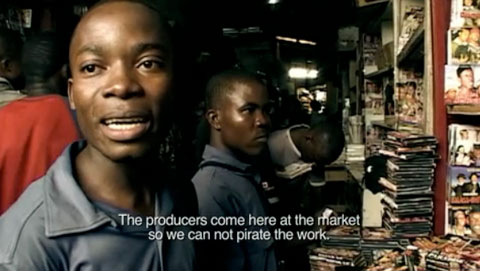
Today we will be watching the second part of the documentary on copyright issues: Good Copy, Bad Copy. You will need to make notes on the points raised in relation to the music industry and how it is dealing with the digital age. You then need to post your notes onto your blogs along with a copy of the documentary.
The articles titled: The problems with digital and Apple: iPhone app and iTunes stores don't make money are essential reading. Once you have read them you need to summarise what they say in your own words and post this to your blog.
The articles titled: The problems with digital and Apple: iPhone app and iTunes stores don't make money are essential reading. Once you have read them you need to summarise what they say in your own words and post this to your blog.
We will go on to compare these elements with Warp and their response to the issue of digital, namely Bleep.
Monday, 22 March 2010
DRM: Digital Rights Management
Digital rights management (DRM) is a generic term for access control technologies that can be used by hardware manufacturers, publishers, copyright holders and individuals to impose limitations on the usage of digital content and devices. The term is used to describe any technology that inhibits uses of digital content not desired or intended by the content provider. The term does not generally refer to other forms of copy protection which can be circumvented without modifying the file or device, such as serial numbers or keyfiles. It can also refer to restrictions associated with specific instances of digital works or devices. Digital rights management is used by companies such as Sony, Apple Inc., Microsoft, AOL and the BBC.
The use of digital rights management is controversial. Proponents argue it is needed by copyright holders to prevent unauthorized duplication of their work, either to maintain artistic integrity[1] or to ensure continued revenue streams.[2] Some opponents, such as the Free Software Foundation, maintain that the use of the word "rights" is misleading and suggest that people instead use the term digital restrictions management. Their position is essentially that copyright holders are restricting the use of material in ways that are beyond the scope of existing copyright laws, and should not be covered by future laws.[3] The Electronic Frontier Foundation, and other opponents, also consider DRM systems to be anti-competitive practices.[4]
A short documentary about Warp records
A documentary about Warp taken from the SLICES DVD. SLICES is a DVD Magazine for electronic music and presents insights into a multifaceted landscape of scenes, which has become a synonym for innovation and progress unlike any other.
"We devote ourselves to tireless doers, sources of inspiration and style-defining labels and artists. Thus, we offer a genuine alternative to music television."
SLICES reports from the electronic music world by means of portraits, background features and videos.
From Electronica and Downbeat via House to Techno.
Subscribe to:
Posts (Atom)